State index
Montana
Short Route 20 connector state page for the West Yellowstone handoff and the park-edge transition into Idaho.
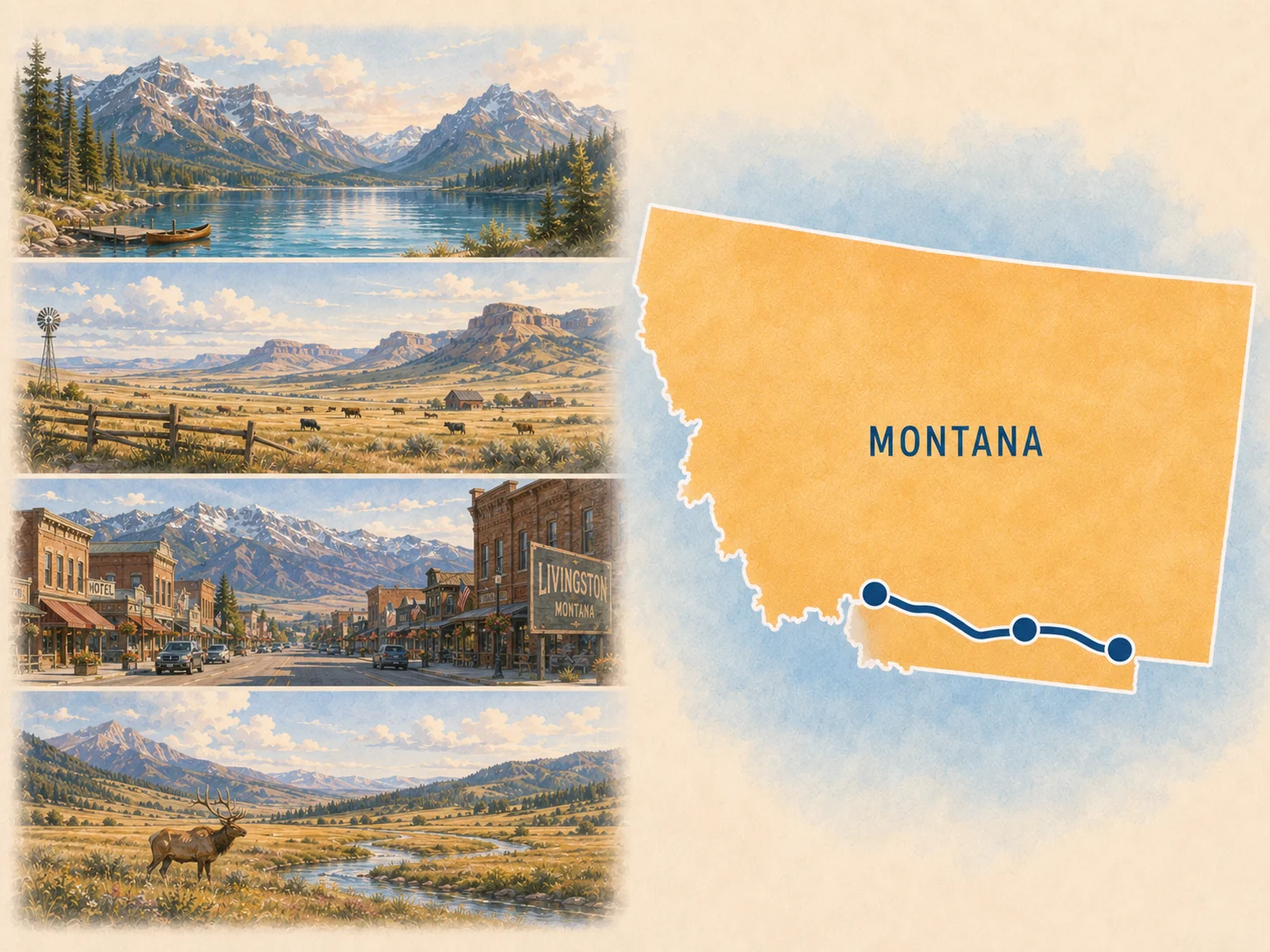
Montana
Montana carries only a brief piece of Route 20, but it provides the essential west-side handoff from Yellowstone into Idaho. The highway emerges from the park at West Yellowstone, shares the gateway town with other major routes, and then reaches the Idaho line before the longer Island Park corridor begins.
Think of this stretch as a transition rather than a Montana road trip. West Yellowstone is the place to refuel, eat, sleep, and reset after a park day. From there, choose whether to make a short handoff to Island Park or continue to Ashton for a more complete move into eastern Idaho.
Printable companion: Use the Montana Route 20 Connector Planner to choose between a West Yellowstone stop, an Island Park transfer, and a longer Ashton continuation.
Choose the right westbound handoff
Short scenic handoff
West Yellowstone to Island Park Scenic Drive
Choose the shorter drive for a direct transfer, one measured nature stop, or a quiet Island Park overnight after Yellowstone.
Longer Idaho continuation
West Yellowstone to Ashton Scenic Drive
Continue to Ashton when you want to leave the park gateway behind and finish in a more conventional town base.
Compact corridor view
West Yellowstone and Island Park
Use this segment for the immediate park-to-Idaho transition, driving conditions, services, and stop-selection guidance.
Full connector view
West Yellowstone, Island Park, and Ashton
Use the longer segment when Ashton is the day’s destination or the next eastern Idaho stage begins there.
Why West Yellowstone matters
The national park crossing should be planned as its own day, not treated like an ordinary highway link between Wyoming and Montana. Yellowstone roads, entrance access, construction, wildlife traffic, and seasonal closures can all change the pace. West Yellowstone gives travelers a clean decision point on the far side: stop for the night, make a short Idaho transfer, or continue through Island Park toward Ashton.
Before leaving town, check Yellowstone road status if the day begins inside the park and check Idaho highway conditions for the route ahead. Fuel and food are easiest to handle before adding a nature stop. Wildlife can be close to the roadway throughout the gateway corridor, so leave room for a slower drive and never build the day around a rigid arrival time.
Build a practical stop
Island Park is dispersed rather than centered on one compact downtown. Choose one primary stop—such as Big Springs, Harriman State Park, or Henrys Lake—based on conditions and the direction of travel. Trying to combine all three can turn a short handoff into a string of detours, especially when trail, side-road, or winter access is limited.
For a simple transfer, stay on Route 20 and use Island Park for a meal, fuel, or lodging. For a half-day drive, add one nature stop and keep the rest flexible. For a slower trip, sleep in Island Park and continue toward Ashton the next morning.
Continue the corridor
Park-day reset
On Route 20
West Yellowstone
Use the gateway town for lodging, supplies, and the decision to stop or continue after Yellowstone.
Quiet overnight
On Route 20
Island Park
Choose Island Park for a forest-and-river setting, scattered services, and one optional nature stop.
Town-based continuation
On Route 20
Ashton
Choose Ashton when the day should finish beyond the resort corridor with an easier launch toward Rexburg.
Statewide planning
Idaho
Continue with Idaho for the full corridor from Island Park through the Snake River Plain and onward to Oregon.