Road trip plan
Miami to Boston to Route 20
Frame Miami, Florida's Gulf Coast, and the Southeast as opening chapters before reaching Boston and following U.S. Route 20 west by bands, gateways, and anchor stretches.

This is the highway-conscious version of the big trip.
Miami, Florida’s Gulf side, Savannah, Beaufort, Charleston, and Greenville are not random pre-trip extras. They are opening chapters that lead toward Boston and the eastern start of U.S. Route 20. From there, the trip becomes a westbound Route 20 crossing organized by bands, gateways, and anchor stretches instead of a giant town spreadsheet.
The trip in one picture
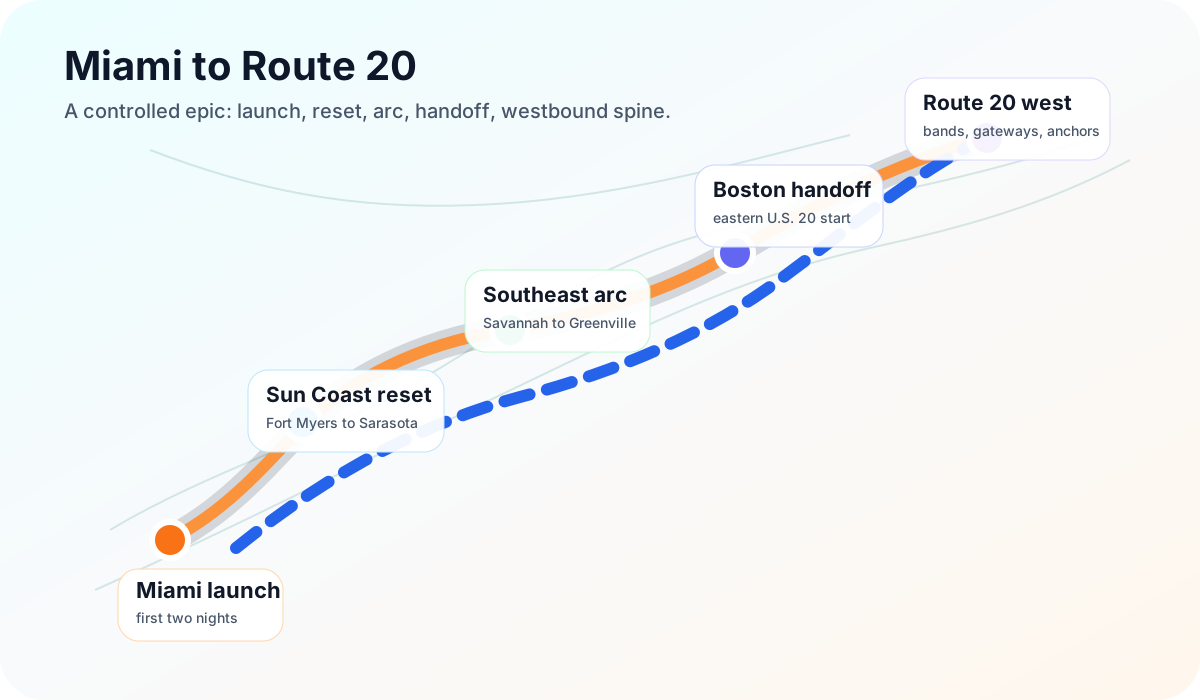
The map is deliberately schematic. It shows the job of each phase: launch, reset, arc, handoff, and westbound spine.
The big shape
Think of the journey in five phases:
- Miami launch
- Gulf / Sun Coast reset
- Southeast arc
- Boston and the eastern U.S. 20 start
- U.S. 20 westbound bands
That shape keeps the trip epic but controlled. It also helps you decide where to linger, where to keep moving, and where a side trip is worth the time.
Florida and the Southeast as opening chapters
Miami gives the trip its launch energy. Florida’s Gulf side slows the pace before the longer drive begins. Savannah, Beaufort, Charleston, and Greenville keep the move north from feeling like empty connector mileage.
Use those Southeast stops as a deliberate prelude: historic cities, low-country texture, waterfront pauses, walkable breaks, and one inland reset before the northern handoff.
For the Florida-specific planning pieces, use the companion guides:
Boston and the eastern U.S. 20 start
Boston is where the route logic changes.
Before Boston, the trip is moving through regions toward the highway. At Boston and Kenmore, it becomes a U.S. Route 20 trip. Use the eastern start as an orientation point, then let the route unfold west through Massachusetts, New York, Pennsylvania, Ohio, the Midwest, the Plains, Yellowstone country, Idaho, Oregon, and the Pacific finish.
Helpful starting pages:
- Boston and Kenmore Route 20 Weekend
- Boston
- Kenmore
- Massachusetts
- Watertown, Allston, Boston, and Kenmore
The now-expanded westbound spine
The trip overlay now has concrete cross-country anchors after Boston. Use them as pacing points, not as a requirement to stop everywhere.
- Erie keeps the Pennsylvania / Lake Erie handoff from feeling like a thin map connection.
- Cleveland gives the Great Lakes band a major Ohio city reset.
- Toledo makes western Ohio feel like a real gateway before Indiana.
- South Bend is the practical Indiana base before the Chicago side.
- Chicago Approach is the book-ahead urban reset before northern Illinois.
- Galena is the flagship heritage town anchor for the Midwest portion.
- Sioux City marks the Iowa-to-Nebraska / Missouri River handoff.
- Cody is the Yellowstone-side gateway for the Wyoming mountain transition.
- Boise is the major Idaho urban reset before the Oregon crossing.
- Bend starts the Central Oregon finish chapter.
- Newport is the Pacific-side arrival point.
Those anchors make the page more useful than a vague coast-to-coast dream. They give the traveler a way to divide the long Route 20 crossing into decisions.
How to think about the westbound crossing
Do not plan the whole Route 20 crossing as one endless list.
Plan it as bands:
- the Massachusetts start and New England handoff
- New York and the Finger Lakes rhythm
- Pennsylvania and Ohio lake-and-town movement
- Indiana, Illinois, Iowa, and the Midwest crossing
- Nebraska and the Plains bridge
- Wyoming and Yellowstone-side transitions
- Idaho continuation
- Oregon high desert, Cascades, and Pacific finish
Use the Route 20 overview when you need the big explanation and the route map when you want to see how the corridor holds together.
Anchor bands instead of a town spreadsheet
A coast-to-coast trip needs structure, not a complete list of every possible stop.
Use gateway cities and anchor stretches to decide where the trip changes character. Then use the site’s segment and place pages to fill in the practical details once you know which band deserves your time.
Good planning sequence:
- Read the route overview.
- Open the route map.
- Pick one or two bands that matter most.
- Choose a segment or trip page inside that band.
- Add towns and side trips only after the main shape is clear.
Where book-ahead and side-trip layers help
Use book-ahead ideas when they solve a real road-trip problem: a city gateway, a museum or history anchor, a side trip worth timing, or a weather-resilient stop.
Do not make every stretch a booking exercise. Some Route 20 days should stay open, especially through smaller towns and scenic transitions.
The best book-ahead candidates in this version are city and gateway stops: Miami, the Sun Coast water outings, Boston, Cleveland, the Chicago Approach, Cody, Boise, Bend, and the Oregon coast finish. The best open-ended stretches are the smaller towns and scenic transitions between those anchors.
Best handoffs for this journey
Use the companion sites before Boston, then return here for the highway spine:
- Start with Easily Miami’s launch-city version when the first two nights need shape.
- Continue with Easy Sun Coast’s reset-phase version when the Florida west coast needs a calm plan.
- Use this page when the trip is ready to become a Route 20 journey.
Continue planning
Start here:
Use the companion site pages for the opening chapters, then return here when the trip reaches Boston and becomes the westbound Route 20 spine.